
REVELARTEURS
About
Image · Process · Knowledge
A finished photograph can be remarkably silent.
It does not tell you what stood outside the frame, what was tried before the image worked, which paper was abandoned, why a print changed direction halfway through, or how many years may separate one photograph from another that suddenly seems related to it.
Usually we see what remained.
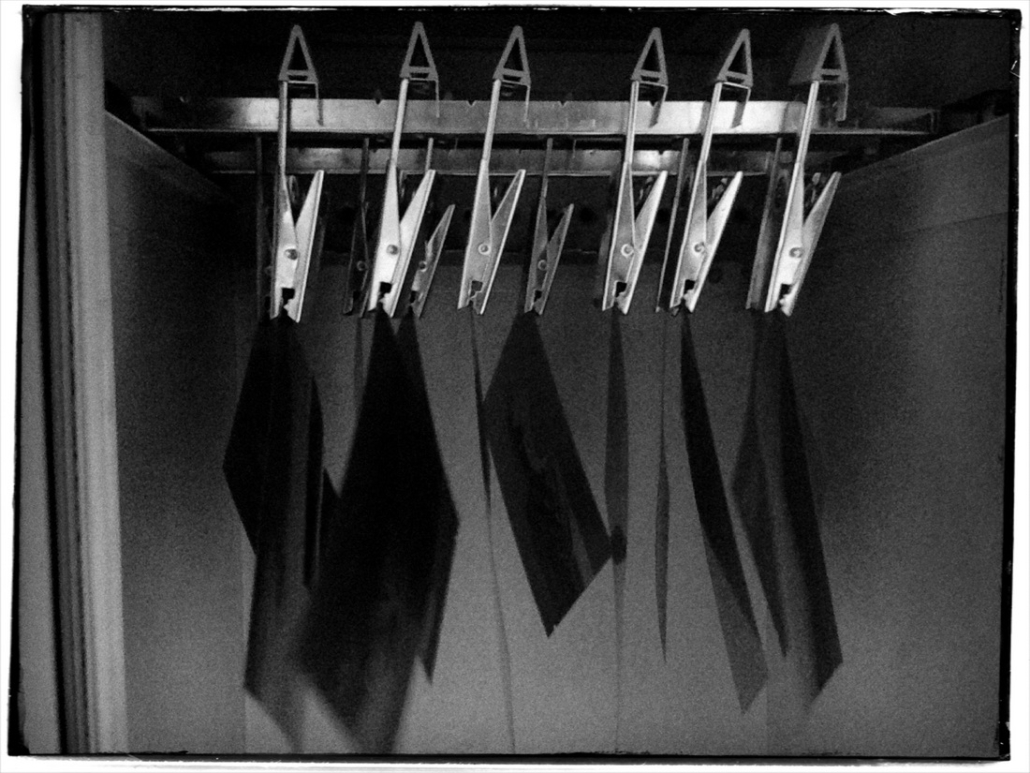
REVELARTEURS is interested in some of what stayed behind.
A note in the margin. A test print. A method used for years and then forgotten. A recipe altered until the original instructions are barely visible beneath the corrections. A photograph that never became part of a finished body of work but still refuses to disappear.
The things around pictures often survive in fragments, and sometimes a fragment is enough to bring back much more than itself.
The name combines révélateur — photographic developer — with art. A developer makes something latent visible, and that seemed a useful way to think about the rest of the work too.
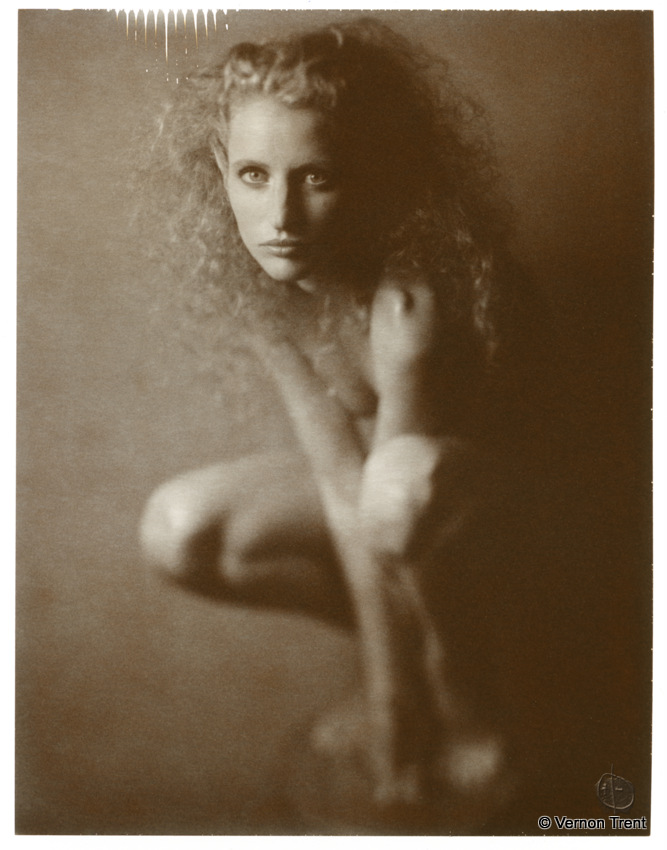
What lies behind the photograph
Not everything behind a photograph needs to be revealed. That contradiction sits somewhere near the centre of the project.
Sometimes knowing how an image was made opens another door. You notice the coating marks differently. A peculiar surface starts to make sense. A failed experiment turns out to have been the beginning of something else.
And sometimes none of that matters.
The print is there. It holds. Whatever happened before has already done its work.
I remember enough photographs that arrived through mistakes, tired chemistry, uneven coatings or some other small failure of control to know that explanation has its limits. There are moments when the camera, the lens, the dilution, the exposure time and the particular soup the paper was swimming in become strangely irrelevant.
The result is there, and the result counts.
REVELARTEURS has to leave room for both: the wish to understand what lies behind an image, and the freedom of the image to escape explanation altogether.
Why gather it now?
The project grew out of a photographic practice accumulated over many years. Some photographs became bodies of work, books or exhibitions. Others were printed once and put away. Some lived on websites that changed several times since then.
Around them gathered another, less visible archive: notebooks, contact sheets, scans, recipes, captions, workshop material, discarded ideas, files whose names made perfect sense at the time, and methods I stopped using until something brought me back to them years later.
For a long time there was no reason to gather all of that in one place.
Then there was.
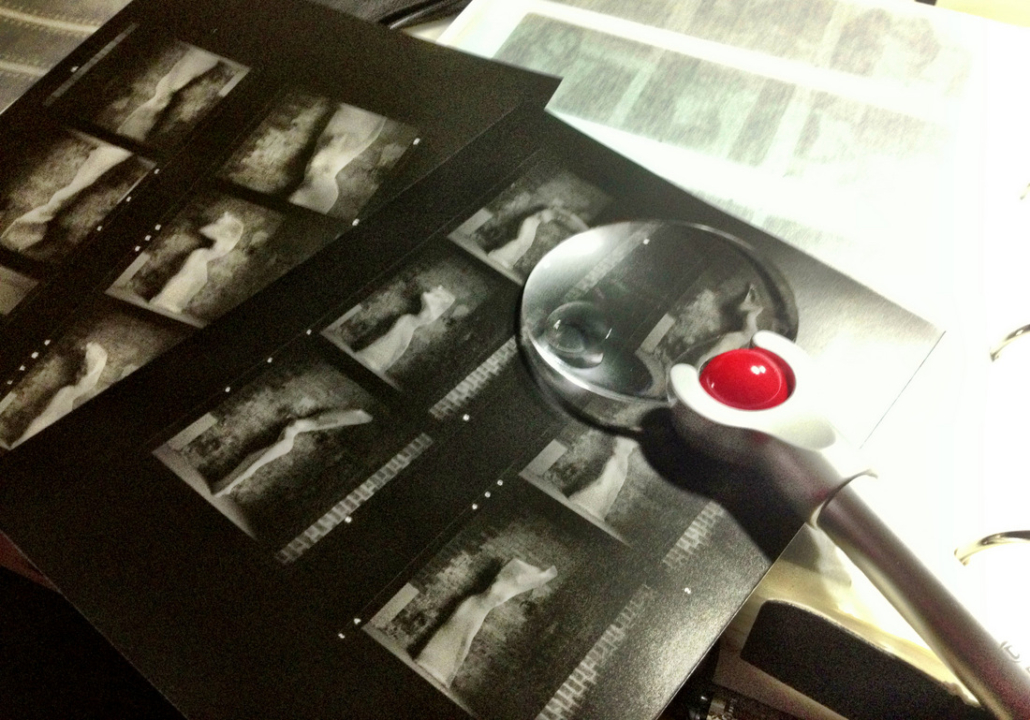
Not because everything deserves preservation. It does not. But some things are worth making visible before they quietly disappear, especially the small observations that rarely enter formal histories because they seemed too ordinary when they were made.
A note written beside a proof print can suddenly reopen an afternoon you had almost forgotten. The joy comes back with the frustration. You remember what you were trying to do, what refused to cooperate, and perhaps why you kept going anyway.
That kind of memory interests me as much as chronology.
The people within the work
Some of what lies behind a photograph comes from the person in front of the camera.
Many of my shoots begin with something simple: a chair, a piece of material, an object to play with. I offer a starting point and watch what happens. The person I am working with brings movements, ideas and possibilities I could not have supplied alone. I observe and choose the moments to hold.
When we have worked together before, that familiarity can leave more room to explore. Trust allows an uncertain idea to develop, and a surprise to become part of the work.
These contributions belong in the stories told here, alongside the materials and decisions. Models and collaborators are named and credited because their presence and imagination helped make the photographs possible.
An archive that can still move
REVELARTEURS is not an archive in the sense of a glass case. The material should still be allowed to move.
An old photograph can meet a new reading. A process can be tested again. A recipe can acquire a revision. A title that once seemed right can turn out not to be. Something dismissed as a failure may become interesting because time changed the question.
There is no need to pretend that everything made in the past was leading neatly toward the present.
It was not.
There were detours and repetitions, periods of confidence followed by doubt, abandoned directions, rediscoveries, and long stretches when one thing simply followed another.
That unevenness is part of the record.
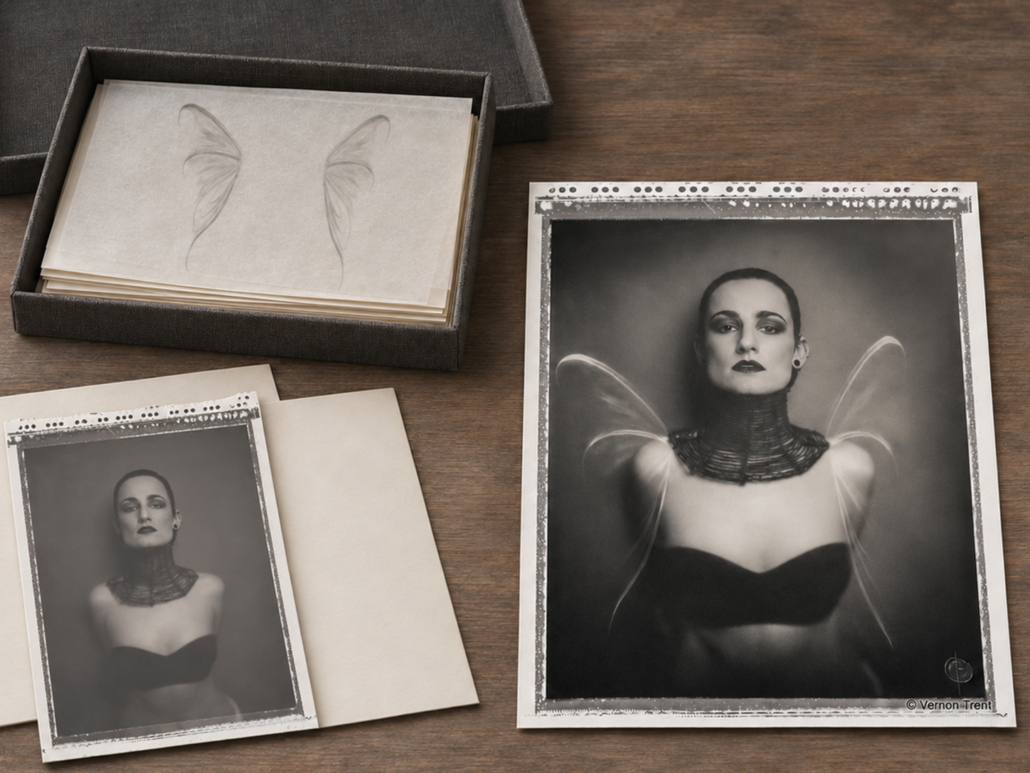
The ecosystem
This is also why the material remains distributed across several places rather than being flattened into one large site.
Edeldruck keeps the working knowledge of process, materials and printing.
XoverIP keeps the photographic notebook and the chronology of seeing and making.
VernonTrent.com holds the selected work that remained after all of that activity.
REVELARTEURS sits among them as publisher, index and connecting layer, asking a slightly different question:
What is worth revealing?
The boundaries are useful. A process note is not a finished photograph. An old photoblog entry is not an artist statement. A technically complicated print is not automatically a better picture.
But one can illuminate another.
A photograph may lead back to the way it was printed. A process note may uncover images made years earlier. An old post may contain the first trace of something that later became a body of work.
Connections appear more naturally when the different things are allowed to remain what they are.
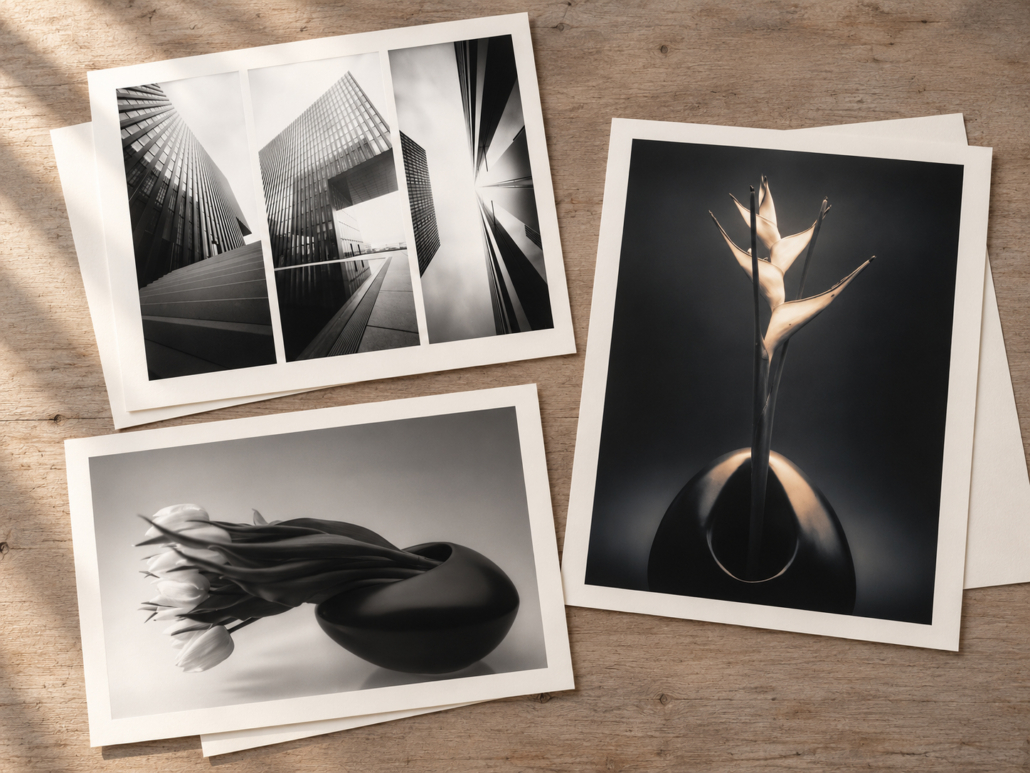
Image · Process · Knowledge
Not as three departments and not as a hierarchy.
Sometimes the image is enough.
Sometimes process explains something the image cannot show.
Sometimes the surviving knowledge is the most useful thing left behind.
And sometimes they sit together so closely that separating them would remove part of what makes the work interesting.
Most of my posts begin somewhere in that overlap. I write about what I bring to a photograph, what I expect might happen, and what makes me change my mind along the way. Working with a model, that might be a gesture I hadn’t thought to ask for. Working with an object, it might be what happens to the light when I turn it a few degrees.
I care about paying attention, knowing my materials and giving the work enough time. As for the rules about how a photograph is supposed to be made, I don’t give a damn. I’m more interested in what happens when I try something, and in what I can learn from it even when it doesn’t work.
Vernon Trent
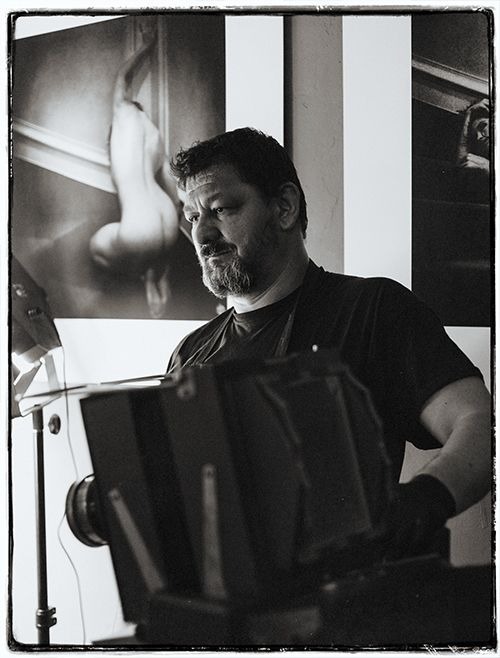
REVELARTEURS was created by Vernon Trent, photographer, visual artist and printmaker, although after enough years those labels begin to matter less than the accumulation of work behind them.
My practice has moved through analogue photography, darkrooms, handmade prints, alternative and historical photographic processes, books, exhibitions and the ordinary persistence of continuing to make pictures.
The selected work has its own place.
Here the questions are broader and perhaps quieter.
What still has something to say?
What connects to something else?
What deserves another look?
What might another photographer, printer, artist or simply curious person be glad to find years from now?
There will be finished things here and unfinished things. Instructions tested many times and observations that remain uncertain. Photographs without explanations, and occasionally explanations without photographs.
Some material will be here because it succeeded. Some because it failed in an interesting way.
The only real requirement is that there is something worth revealing.
Making visible what lies behind the photograph.
And knowing when the photograph has already said enough.