
I can see, but once I was blind…
The photographs depended on St. Merrique’s contribution. A turn, a reach, a shift in balance could change the entire figure. I watched through the camera, but she was finding the movements that gave me something to see.
At first, I saw the shapes.
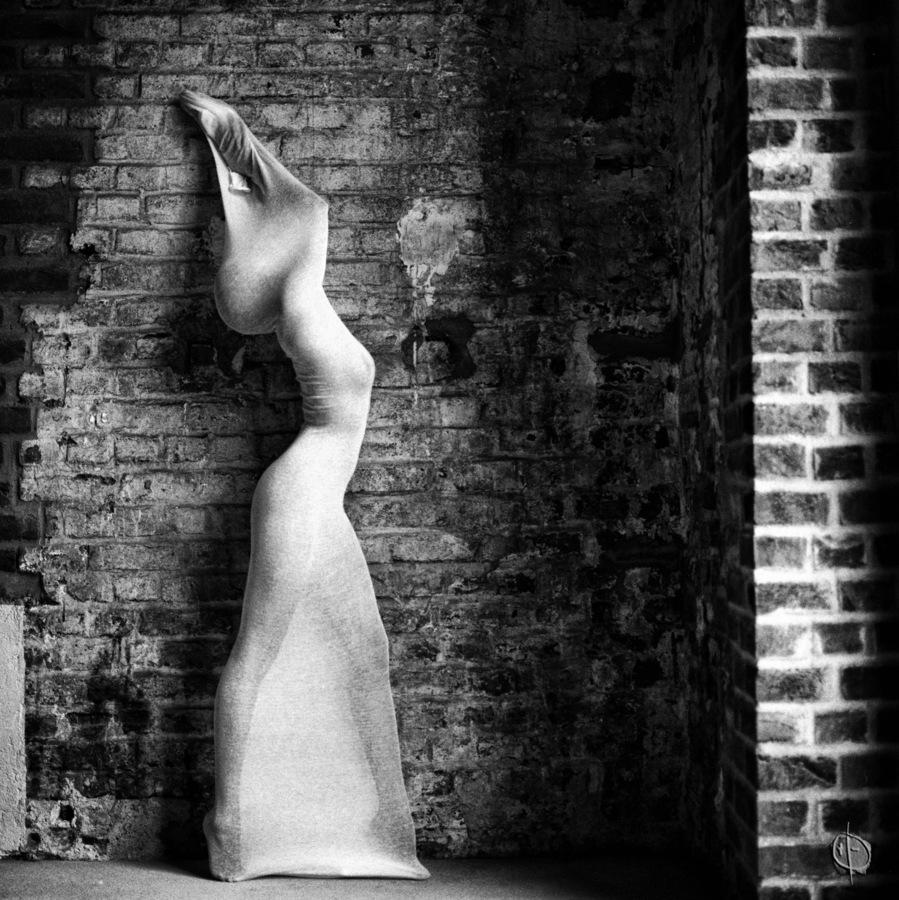
A pale figure against a rough brick wall. The narrow waist, the long curve of a body, an arm stretching the material into an unexpected angle.
Each movement offered another outline. Some looked almost like statues, held briefly in the light before changing again.
It began like many of my shoots. I gave St. Merrique something to play with, then watched what she made of it.
This time, it was Stülpa, a tubular bandage. It pressed close to her body, stretching as she moved. A raised arm pulled it into an angle; a turn changed the curve.
She kept finding possibilities, and I observed, freezing a moment whenever something caught my eye.
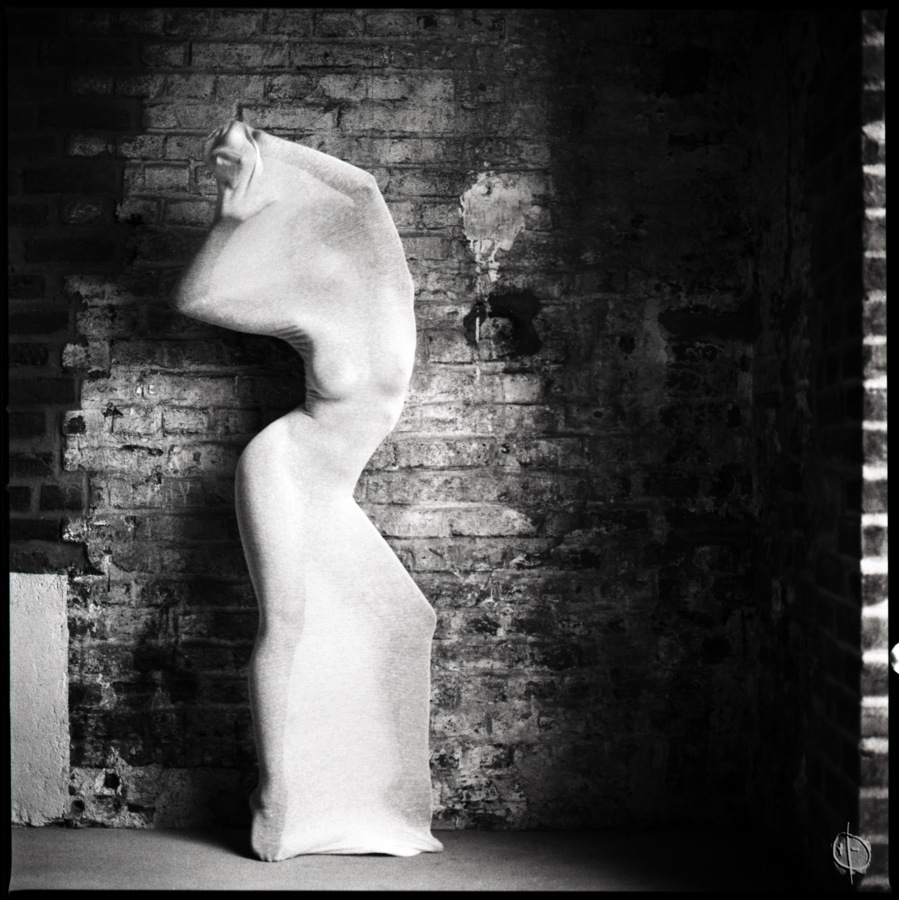
There was pleasure in that exchange. St. Merrique improvised, and I responded through the camera. I could choose when to release the shutter, but the next shape came from her.
At the time, I was absorbed in watching it happen.
Later, looking at the film and then the prints, I began to read those same gestures differently.
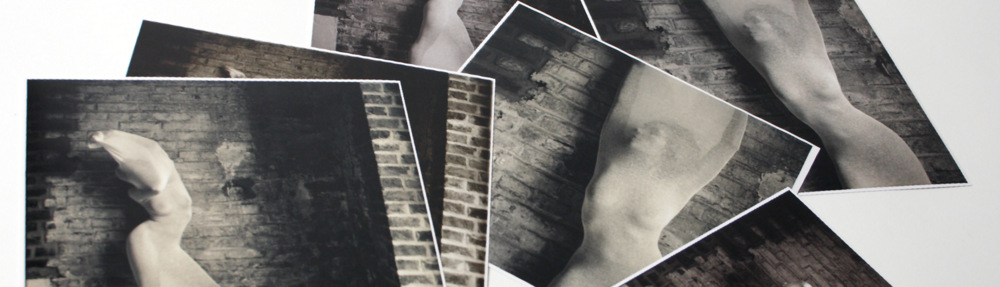
I was responding to those forms… I began to read the same gestures differently.
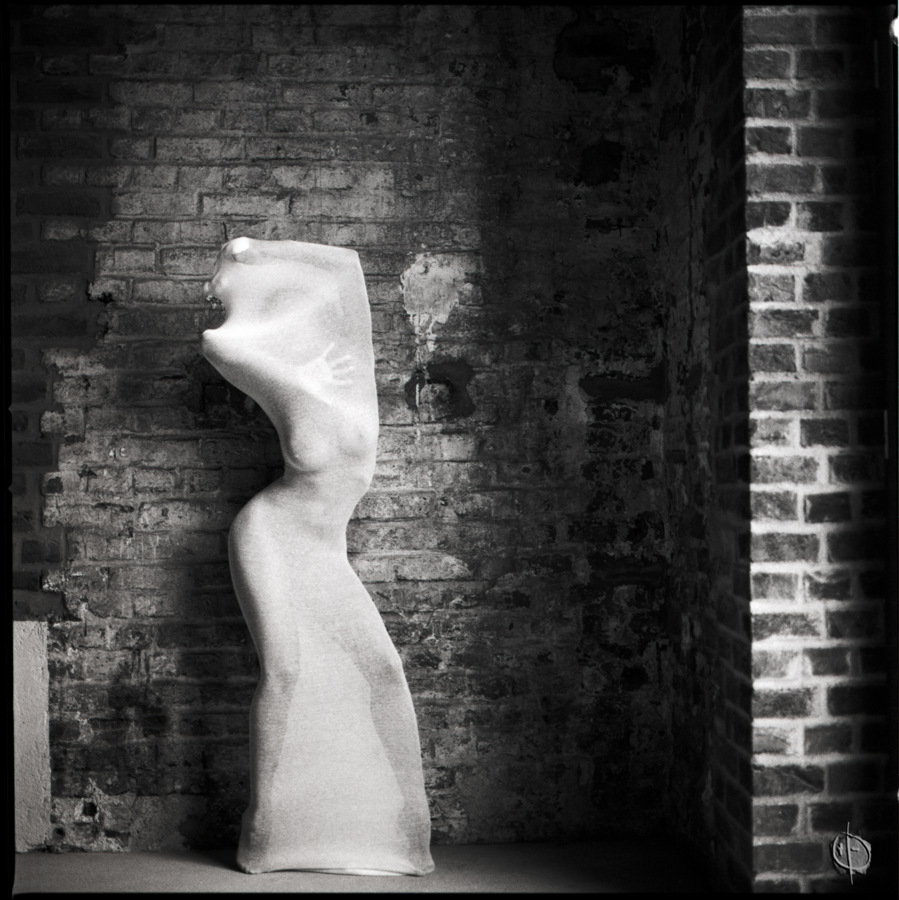
The beautiful outline was still there. But now an arm reaching upwards seemed to be searching for a way out. The material across her face began to feel confining.
A hand was visible beneath the knit. Its fingers were a small detail within the whole photograph, yet once I noticed them, they held my attention. I began to look more closely at the person inside the shape.
Was she stretching into a pose, or trying to escape?
I knew what had happened in front of the camera. Yet the photograph allowed that question to remain.
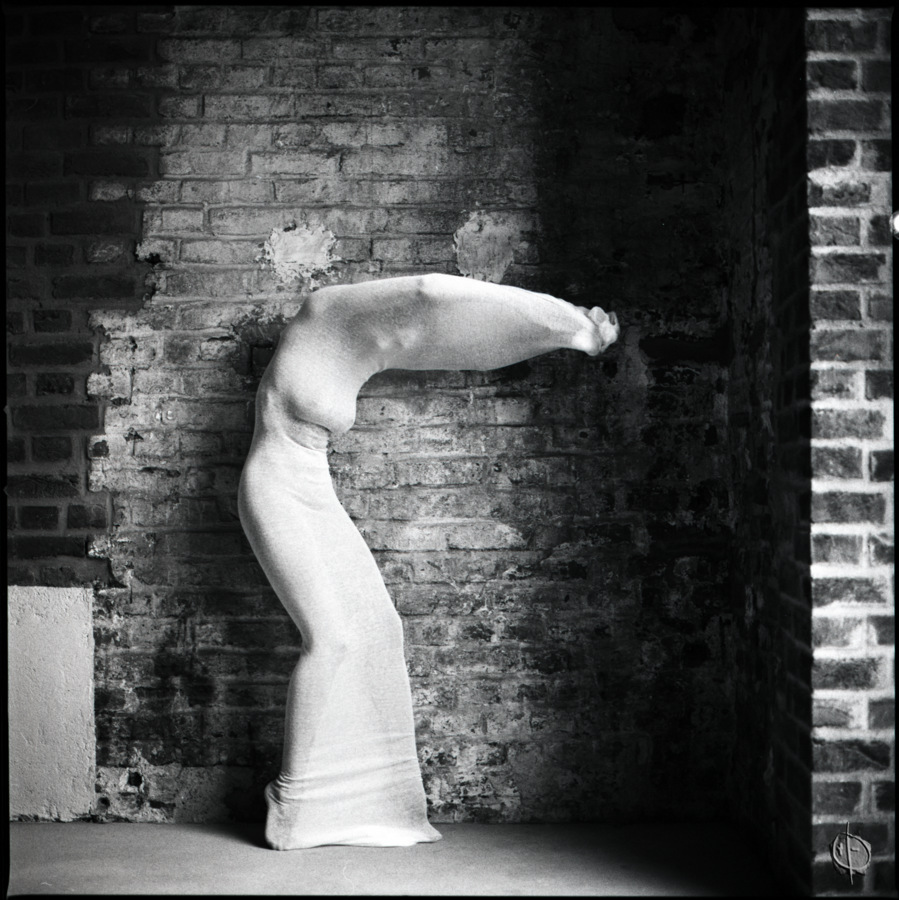
The bandage began to look like a prison fitted so closely to the body that it accompanied every effort to move. It yielded, but stayed with her. A curve I had admired for its elegance could suddenly suggest strain.
I thought of a snake before shedding its skin: that moment when the covering still holds, although the body within is ready to leave it behind.
That thought came afterwards. I hadn’t gone into the session with a story about escape. It emerged from spending time with photographs I thought I already knew.
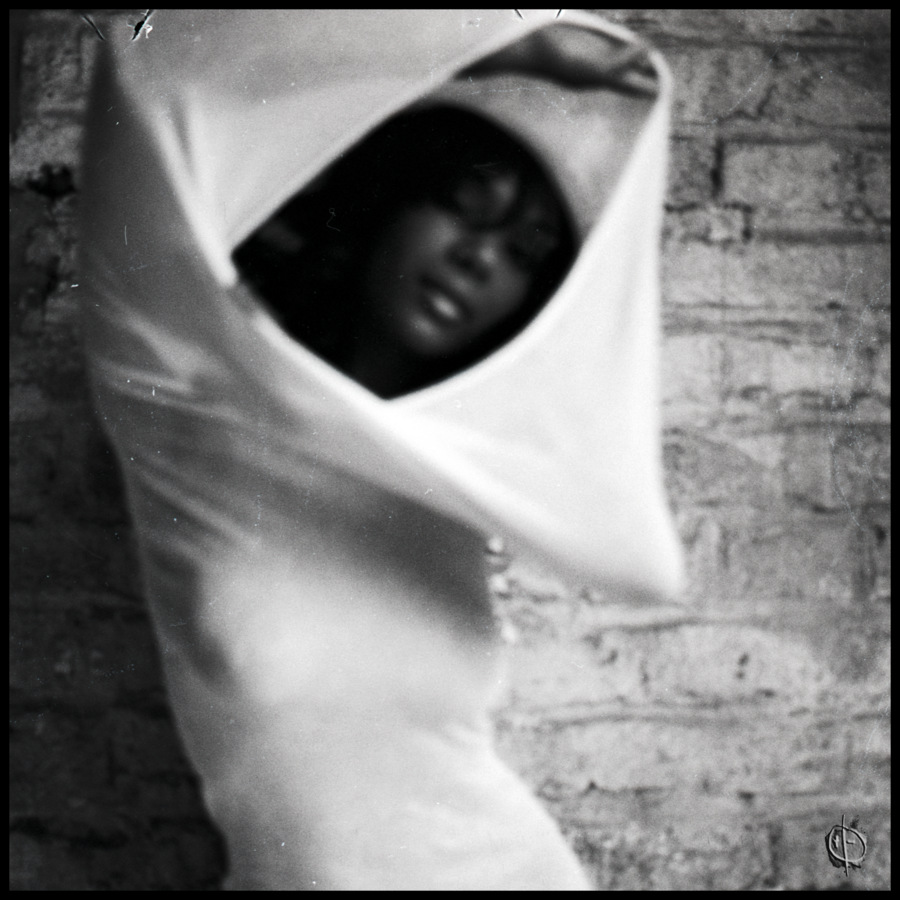
Then there was her face, appearing through an opening.
Seeing it changed how I looked back at the enclosed figures. The person was easier to recognise here, but she had been present throughout—in the pressure of a hand, the angle of a shoulder, the balance needed to hold a position.
How much did I need to see before I could recognise what was already there?
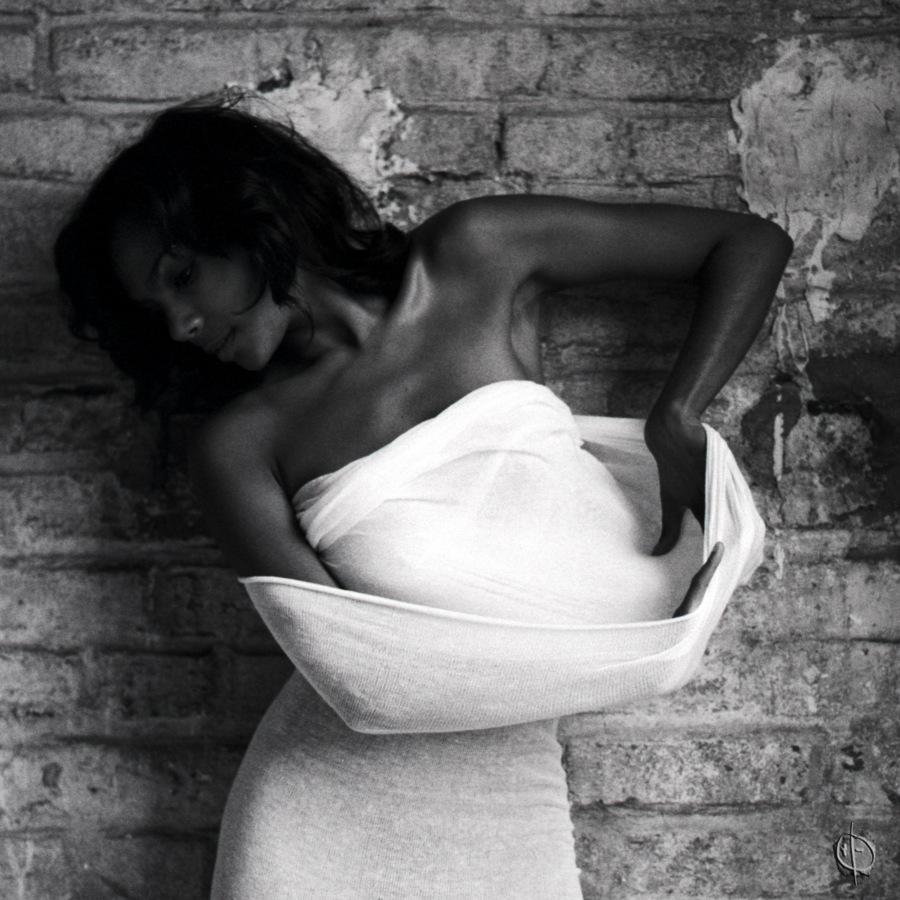
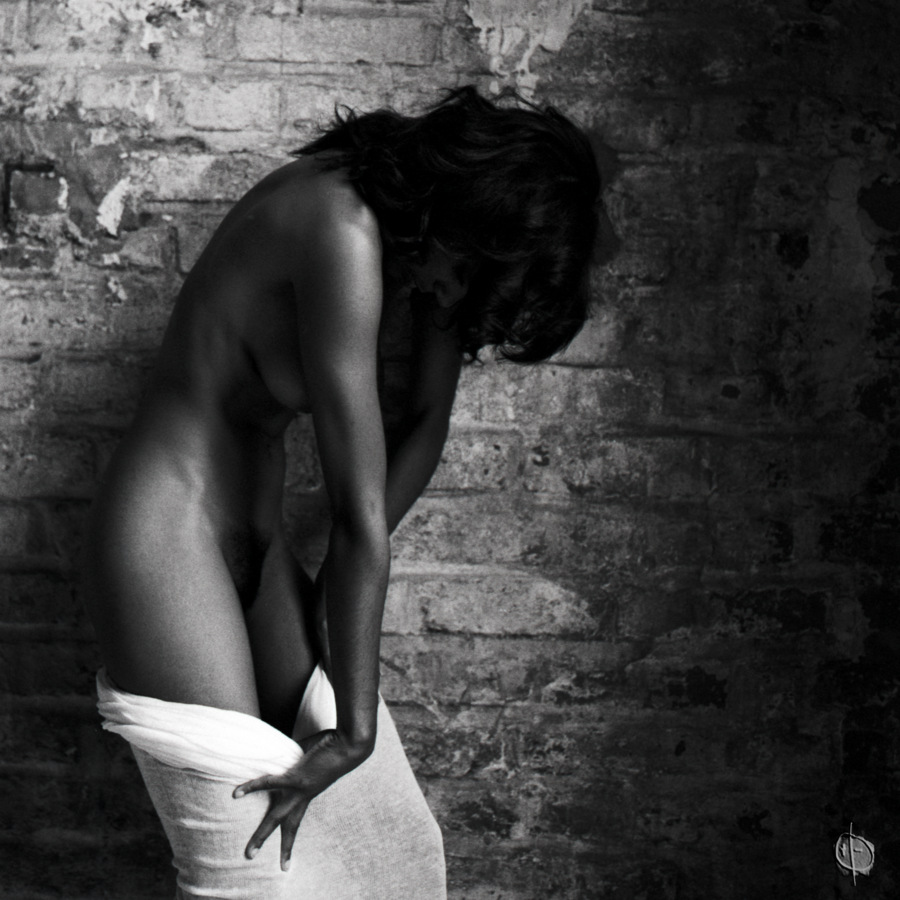
In other photographs, she takes hold of the covering itself. Her hands draw it away from her body, gathering it into folds. These gestures gave the idea of shedding something a physical presence.
Still, I couldn’t turn the whole series into a straightforward journey from confinement to freedom. Some photographs felt assured; others seemed vulnerable. Even an exposed face did not explain everything.
There was room for more than one reading, and for my own reading to change.
The photographs had not changed. My attention had.
That is where the title, I can see, but once I was blind, found its meaning for me. I had been looking carefully enough to make the pictures, yet there were things in them I still needed time to recognise.
It made me think about the little things we pass every day: a gesture, a hesitation, an effort whose importance we cannot judge from the outside.
We recognise an outline and move on. Sometimes, staying a little longer changes what we understand.
Something almost invisible to us might mean the world to the person living it.
I still enjoy the shapes that first caught my eye.
But now, when I look at these photographs, I stay a little longer with the person inside them…
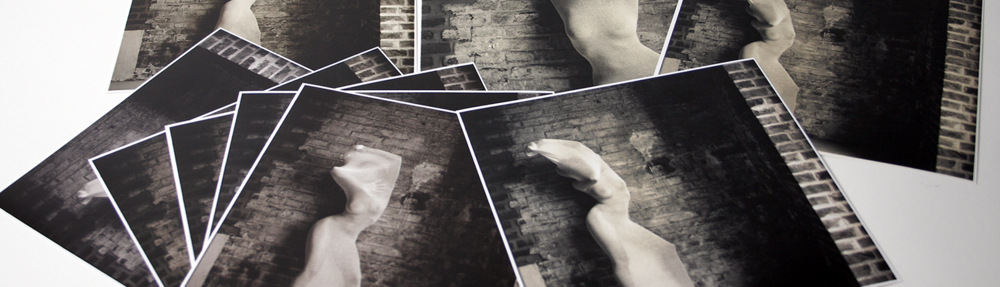
Photographs: Vernon Trent · Model and collaborator: St. Merrique

