
A vase, a winter weekend
That vase had been with me for years, the kind of thing you stop noticing because it’s always there. Then I opened the cupboard one day and, for no big reason, thought, I’ll mess around with it for a bit.
Winter 2010, a weekend, cold outside. I’d just been to the Robert Mapplethorpe retrospective in Düsseldorf, and I walked away with that familiar feeling of his work still humming in the back of my mind. The control he had, form, perspective, light, it always pushed me. This time it pushed a little harder.
I didn’t set out to make anything complicated. Black cardboard as a background. One softbox overhead. The Plaubel locked onto a heavy tripod. Vase on the table, flowers dropped in, and I began.
And then I didn’t really stop.
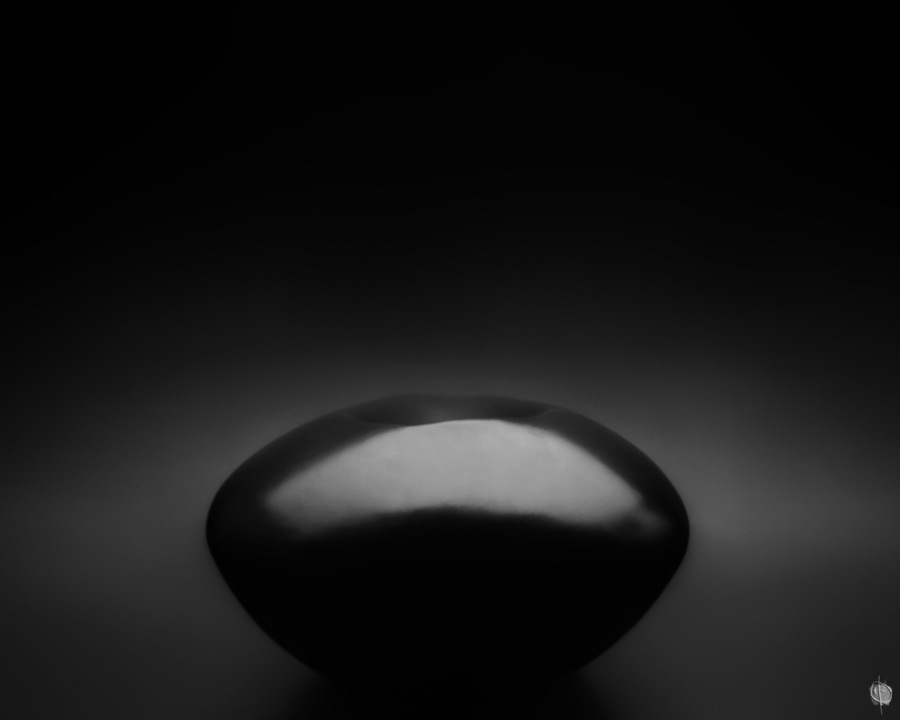
My way of working is to build things piece by piece. One object goes down first, then the next choice comes from what that first one suggests. Sometimes it’s the outline I’m chasing, sometimes it’s the shadow. Other times I’m not chasing anything at all, I’m just watching for the moment something clicks. A detail pulls at me, I answer it, and that answer sets up the next move.
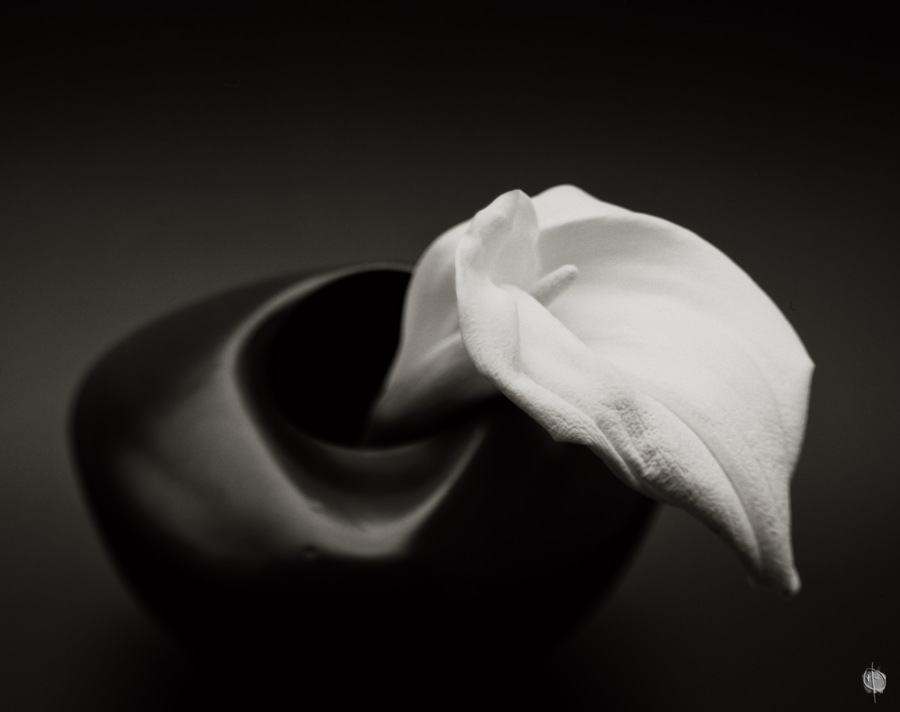
That vase had more in it than I expected. Turn it one way and it sat squat and wide under the flowers, grounded, heavy. Twist it slightly and the opening turned into this tall, dark column, with just a thin rim catching light. A stem could slide through cleanly, tip away, or fade almost completely against that darkness. Every small change created a new link between the vessel and what it held, and I kept stumbling into another one.
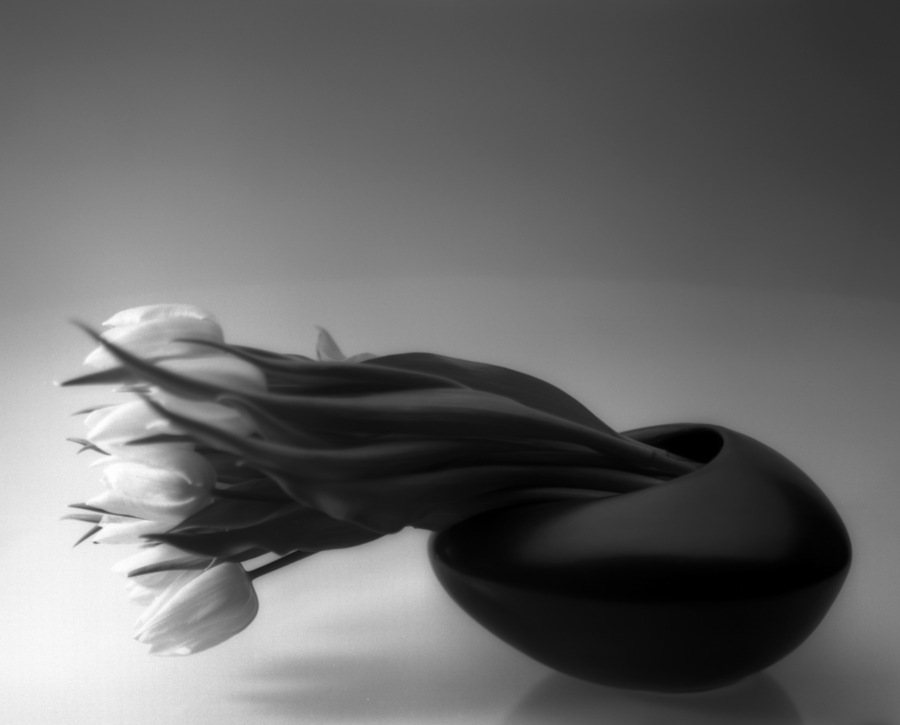
One arrangement, the one where the flowers lean to the side, carries a clear nod to Mapplethorpe. That image had stuck with me. I wanted my own version of that balance, the vase pulling weight on one end, the flowers reaching out on the other, the stems doing the quiet work of keeping it all in one piece.
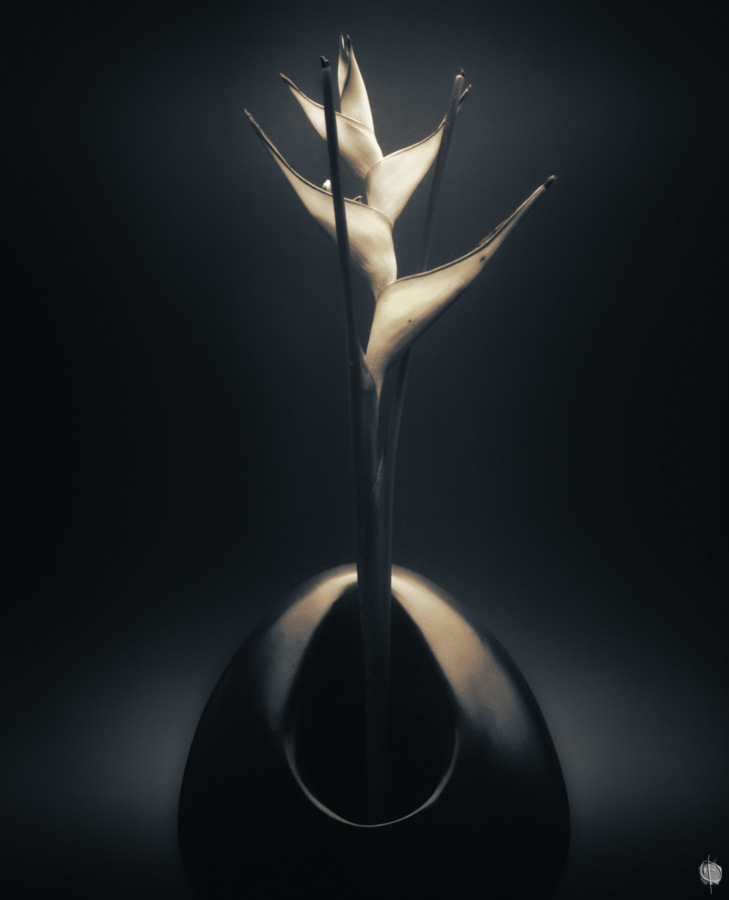
But the session didn’t stay there. Some frames went in a different direction. One flower could take over the whole view. A taller setup could push the vase into near-black, like it was barely present. Once I paid attention, the little tabletop scene suddenly felt endless, plenty there to occupy an entire weekend without repeating myself.
Whenever an arrangement felt like it had landed, I’d move to the ground glass.
That shift mattered. Staring at the objects with my own eyes only got me so far. I can’t tilt my vision or slide it around the way I can with the camera’s front and rear standards. On the glass, those movements became visible, and I could judge what they actually did, not what I imagined they might do.
The setup might have been sitting right in front of me, finished in a way, yet I was still finding the photograph inside it.
So I’d adjust, check again, and go where the image led. The camera movements weren’t just technical steps, they were part of the searching. Only once that felt resolved did I settle on exposure.
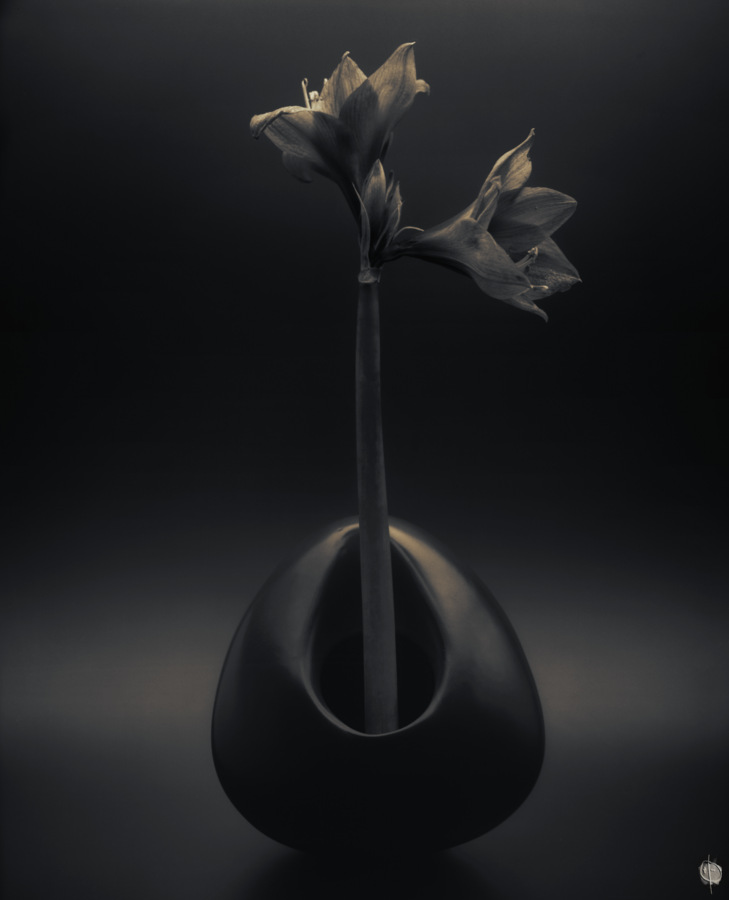
When the discovery is done, that’s when the image arrives.
What I remember most is how smoothly one frame nudged me into the next. A familiar vase, a handful of flowers, and a camera that kept the door open for more looking. Every arrangement answered something, then left another question sitting there.
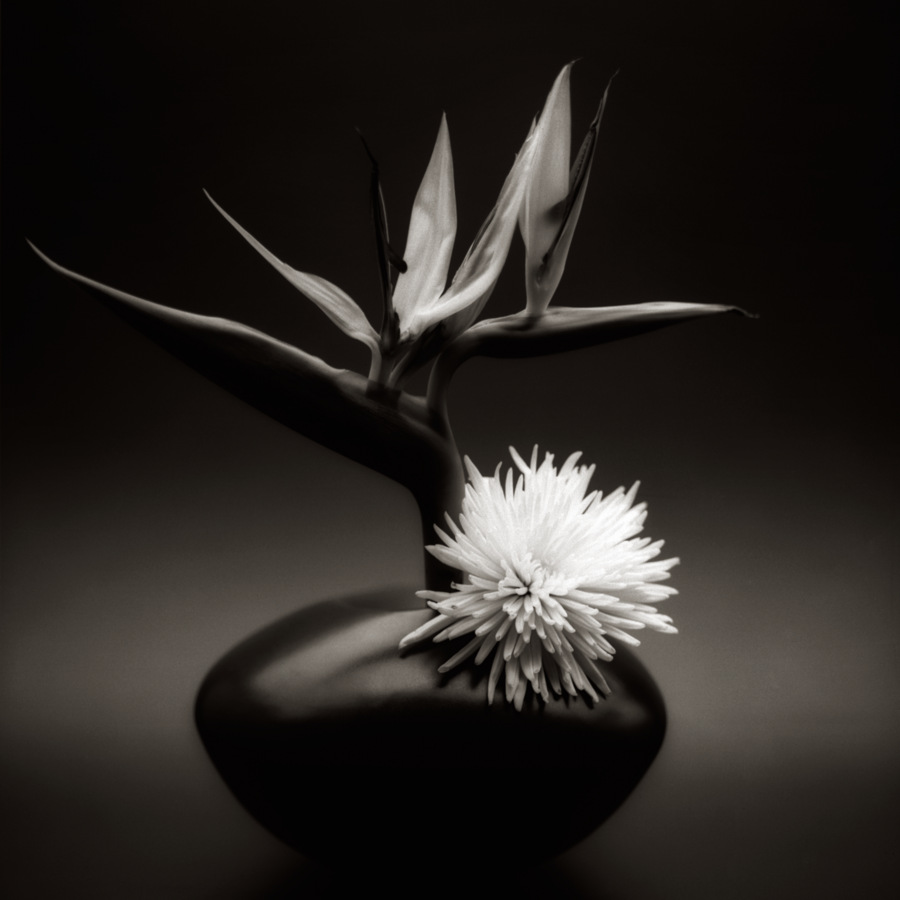
All I’d meant to do was play a little with a vase from the cupboard.
It ended up taking my whole weekend.

