
Domburg: One Negative, Several Lives
An invitation, a winter beach and a Holga pinhole camera. How a photograph taken in 2015 ended up as black-and-white, lith and cyanotype prints - and why the mood counted for more than the detail.
An invitation from a friend took me to Domburg in the winter of 2015. Weather and sea were dramatic. We left our bags and our watches behind, and let the place take its own time with us.
I saw something I wanted to capture. No setup, no elaborate hunt for a composition. Just one of those things where the scene finds you and you know it needs to be photographed.
I had my Holga WPC with me.
The other Holgas have a cult status for a good reason. I get it. I love pinhole photography. The 6 x 12 cm format of the WPC gives you space to work with. Just the right amount of room for a wide beach, wild sea and dramatic sky.
No rangefinder. You compose, frame and, using a pinhole camera, calculate the exposure with a pinhole calculator. Some things are easy to calculate, some aren’t. But both is part of what keeps me interested in the process.
The scene only really announced itself to me when I developed the film. There it was among the frames. I saw its potential immediately and wanted to explore what different ways of printing it might bring out.
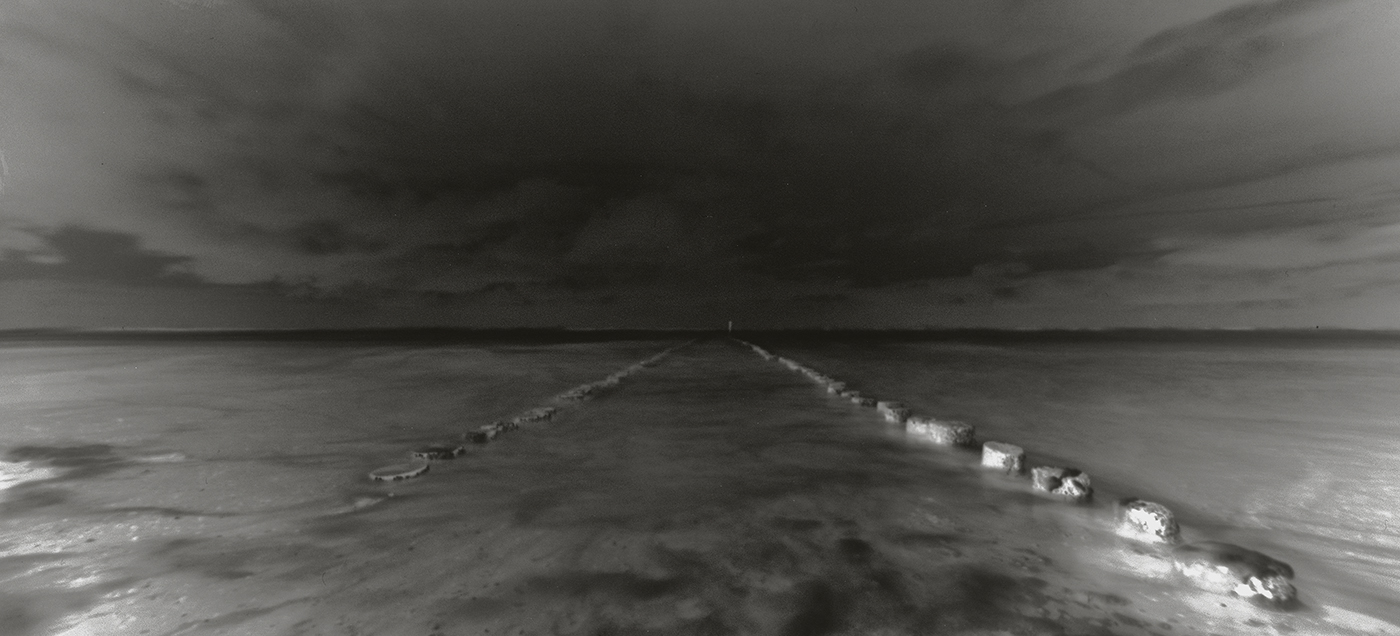
It became a conventional black-and-white print, a lith print and a cyanotype.
Each one gave me another opportunity to spend time with the image. The lith print took it more towards dark. To me it just seemed like on the road to hell. That print was sold and I didn’t keep a digital backup.
For me, the cyanotype felt more at home with the subject matter. The deep blues seemed to fit the scene. I made a digital negative of the original 6 x 12 cm film image in order to transfer the photograph into another printing process.
Same starting point, another way of being present with the photograph.
The black-and-white print and the blue print offered me different ways of looking at the weather, sea and space in between. Neither was necessary without the other. They offered different weights to the things that were already there.
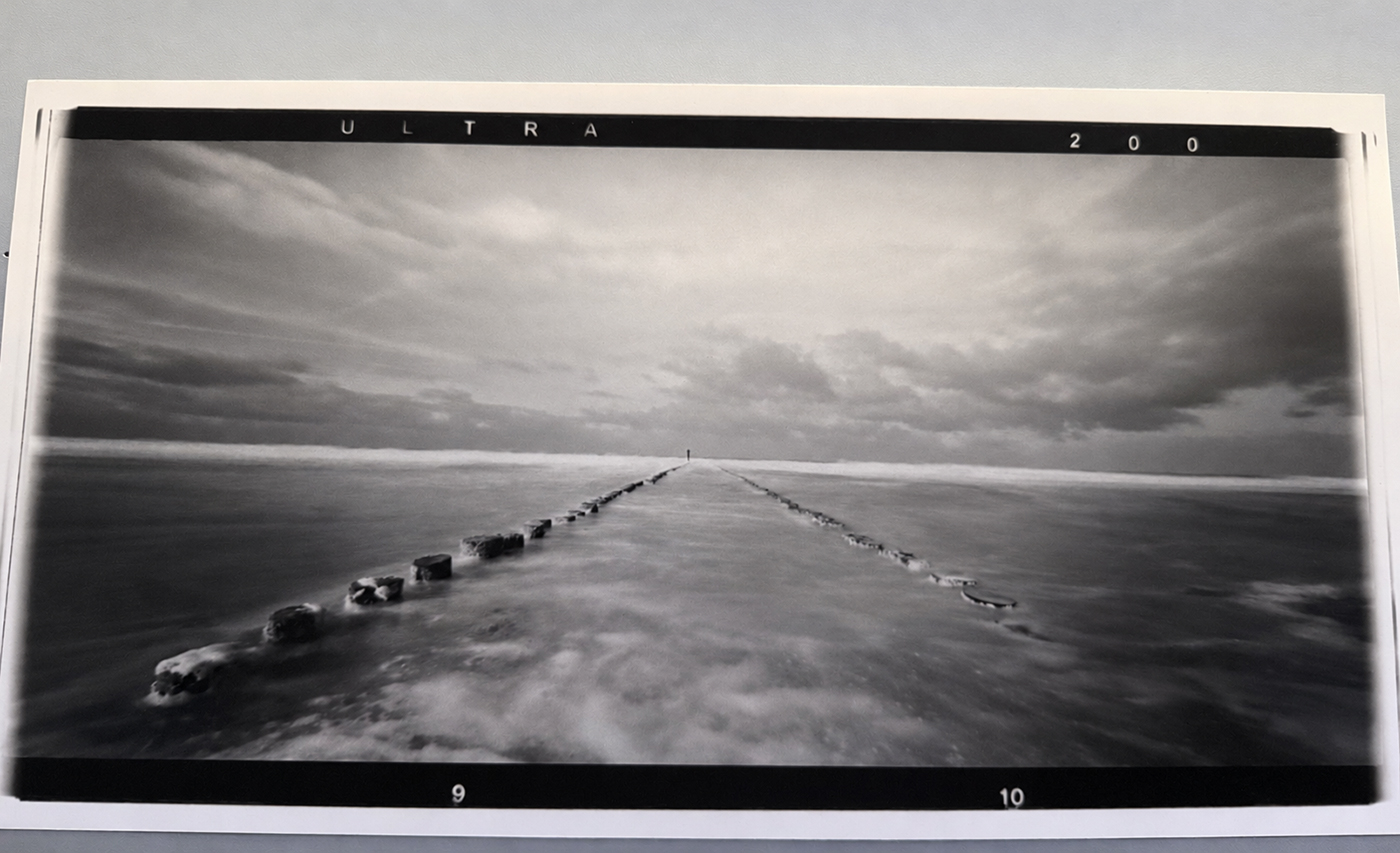
Much of what draws me to this photograph has to do with the tension within the image.
The sky can be overwhelming. So can the sea at the bottom of the image. There’s power in both that makes you aware of how small you are in relation to the sea. But as my focus moves towards the centre of the image, the photograph takes on a more lonely feeling.
I keep moving between unease and solitude, and back to unease.
Not every photograph benefits from showing you all the detail. Some images gain enormously from fine detail. With this one, I’m more interested in the mood. My pinhole photograph gives me enough information to identify the place and the weather, and leave the rest to me as I look at it. I don’t need to see all the small things resolved.
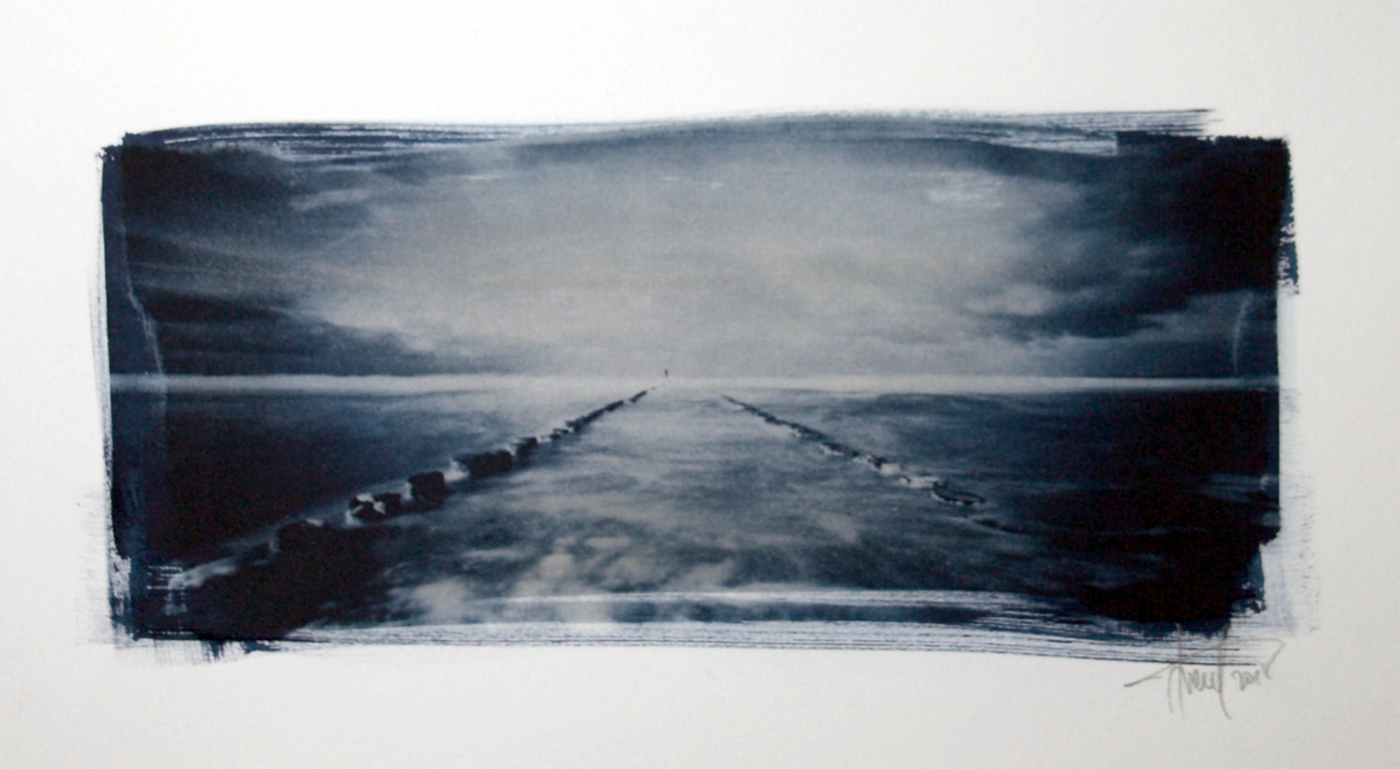
Which is another reason I was interested in printing it. I wanted to see how the mood would hold – and where it would change. The different printing processes became different ways for me to ask that question with my hands.
This is the kind of encounter I want to make space for in REVELARTEURS: a photograph worth looking at, the decisions behind it and what you can learn by following them a little ways further.
Domburg started with a walk on a winter beach. The negative gave me something to come back to. The prints kept the dialogue going.
Photographs and prints © Vernon Trent.

